The Missing Middle of Foot Care
In Matthews, Olena Burykina built a pedicure practice for the feet other salons send away. Now she is teaching other technicians how she thinks.
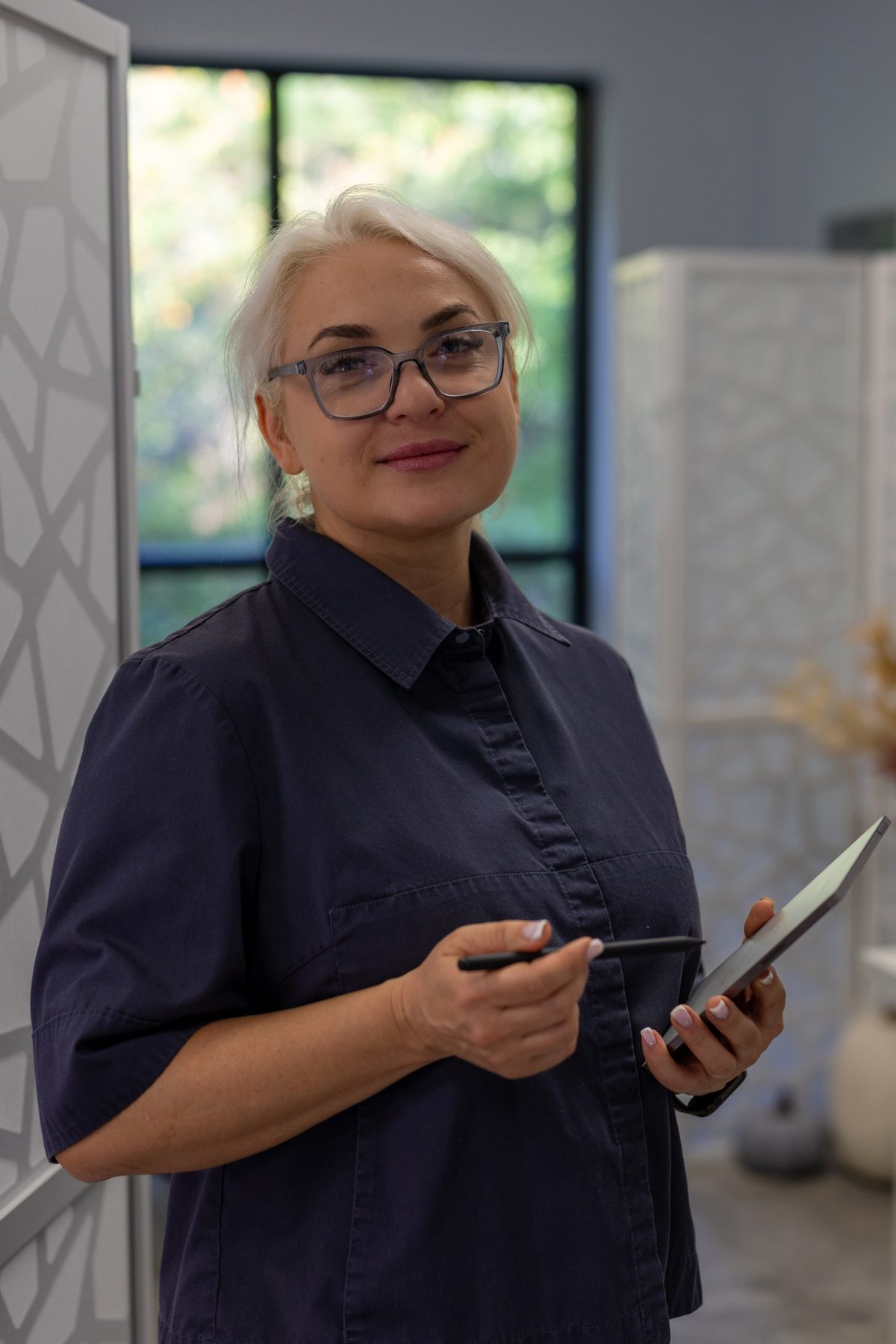
Some of Olena Burykina’s clients drive six hours to get to her salon.
A lot of them drive three. Four weeks later, they do it again. A few book months ahead so they don’t lose their place.
They aren’t coming for polish. They come with heels so thick the skin has split, with cracks that open when they walk, with nails that curve and press. Some were sent by their podiatrists.
“I realized how many people come to us with problems,” she says. “Not only from Charlotte. From different cities, and even from different states.”
This fall she launched Linel Pedicure Academy, online training in advanced pedicure for licensed nail technicians. It opened in five languages.
The man in the first class
About ten years ago, Burykina was an accountant.
“The thought came into my head that I was doing something wrong,” she says, “and I needed to change my life.”
She went to manicure school, then pedicure school. Her first pedicure course was the pretty kind, gel polish and not much else. For reasons nobody ever explained, the model that day was a man whose nails and skin were in serious trouble.
She sat down next to him and couldn’t stop asking. Why is this happening? What is it? Can it be solved? How did it start? The other students crowded the doorway, peeking in and whispering to each other.
Her teacher watched for a while. Then she told her: “You’ll be an advanced pedicure technician.”
“I thought, what does she mean?” Burykina says. “But from that moment I understood what I needed to do. I understood that this is my mission.”
She still hasn’t stopped loving it, she says. Not once in ten years.
Suitcases of tools
She came to the United States from Ukraine in 2022. Her suitcases held her equipment and instruments. There wasn’t much money.
“There was no first capital at all,” she says.
Paperwork came first. Her training hours and diplomas were enough for a North Carolina license, and she got one. Then she started seeing clients in a rented apartment. Six months in, there were more of them than the apartment could hold. She opened LINEL in 2023.
The salon now has four technicians besides Burykina, one of them on maternity leave. There are two administrators, because one couldn’t keep up with the clients, the schedule and the academy all at once.
“I still don’t fully realize what’s happening,” she says. “Everything flowed from one thing into another.”
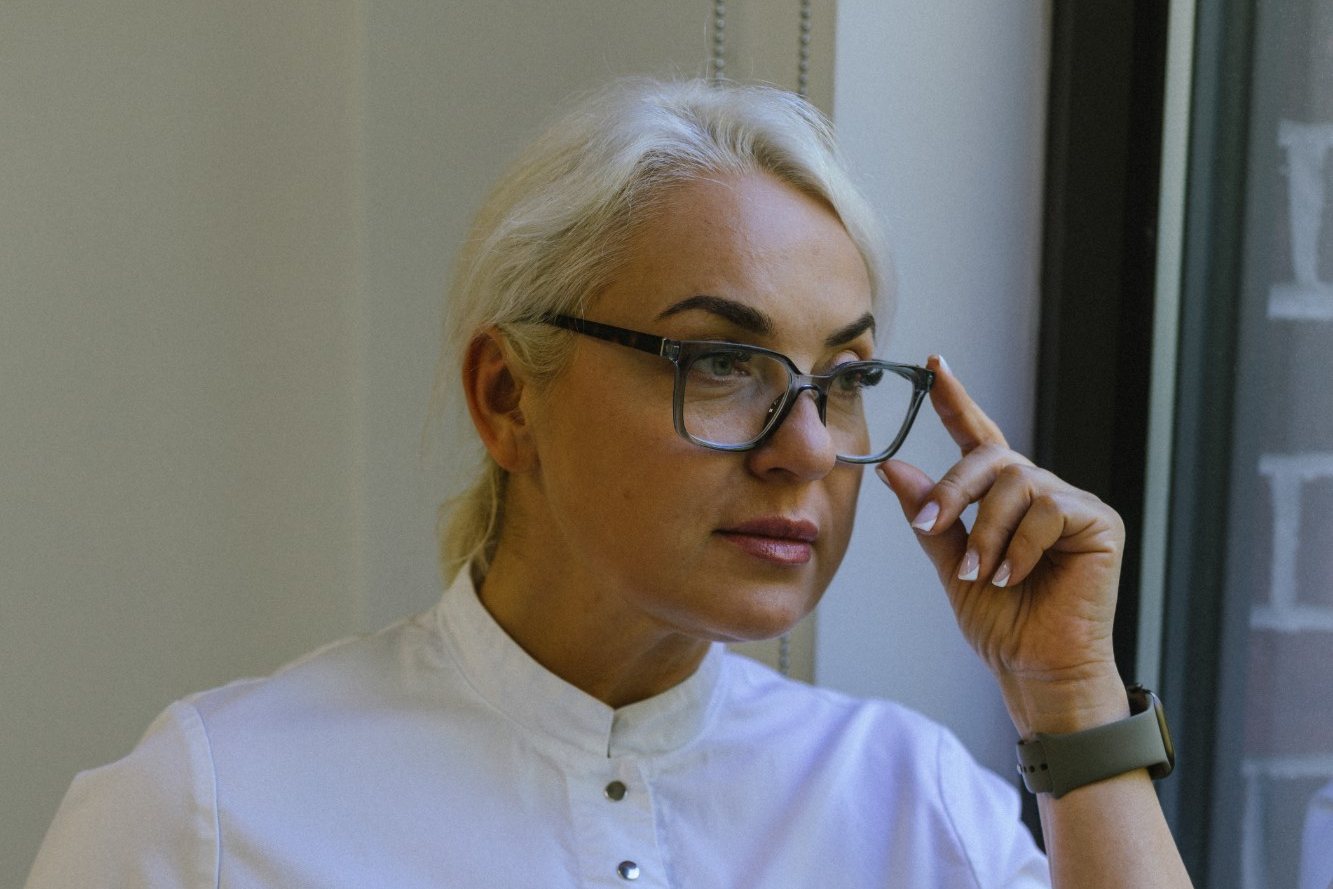
The missing middle
Foot care in the United States has two ends. On one end are podiatrists, dermatologists and surgeons, who diagnose, operate and prescribe. On the other are licensed nail technicians.
North Carolina’s manicurist license covers the care of feet and toenails, and the statute is plain about where it stops. It “shall not include the treatment of pathologic conditions.” The state board adds its own rules. No blades on the skin. Nothing that reaches the dermis. No service at all for a client who appears to have fungus, or skin that is inflamed, infected or broken.
None of that keeps clients with real problems out of the pedicure chair.
“These technicians still do something,” Burykina says, “and they do it wrong.”
Her practice sits in between, on the cosmetic side of the line. She works on the surface of the skin and nail with files and abrasives. When what she sees is a medical question, she sends the client to a doctor. Some podiatrists send clients the other way, for regular pedicure care.
“We never do injections. We never treat anyone. We work closely with doctors.”
“It looks like fungus”
The conversation she has most often goes like this. A client sits down and says she has fungus. Burykina asks how she knows.
“Well, it looks like fungus.”
“What looks like fungus could be psoriasis, or eczema of the nail bed, or anything else,” Burykina says. “Only doctors can make a diagnosis.”
So she doesn’t guess. She sends the client to a doctor, and the service waits.
That stopping point is built into the course. Students learn to spot the moments when the right move is to put the tools down and say it plainly. You need to see a doctor first.
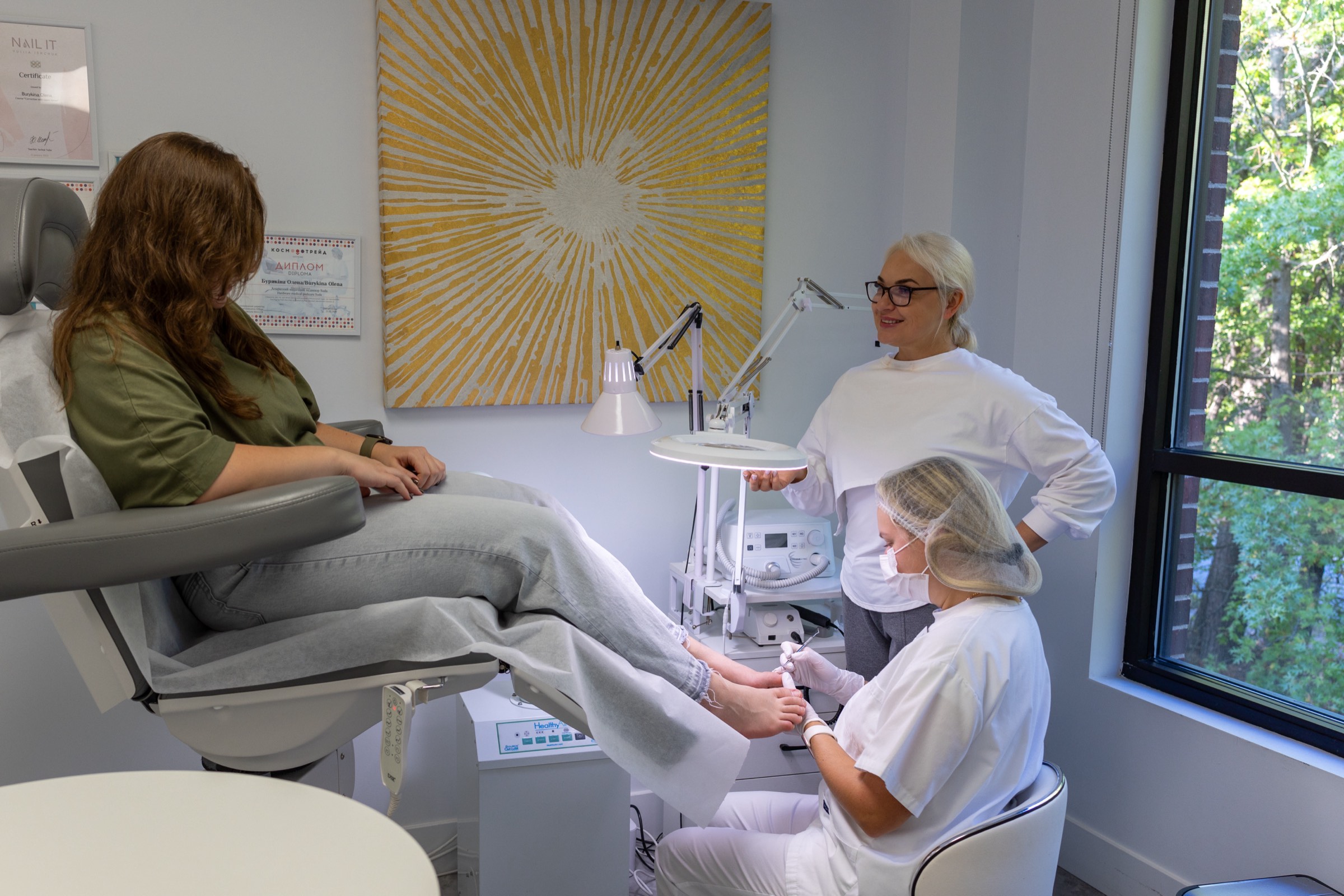
Learn the why
The academy’s line is “Learn the why, not just the how.” Burykina built the course around it.
“I want to teach people to understand why something happened with this specific foot, this specific nail,” she says. “We find the cause, if it’s possible. It’s not always possible, and it’s very important to find that line.”
The first course is about skin: hyperkeratosis, calluses and cracks. Students learn what the epidermis is, why thick skin builds up where it does, and why heels split. They learn which tools fit which job, how skin behaves after a service, and what home care helps a result last. Sometimes the buildup can be kept from coming back. Sometimes it can’t, and then the client should hear so on the first visit.
She kept the first course narrow on purpose. “If one course has everything in it, the knowledge will be superficial,” she says.
Next comes nail correction systems, and it’s almost finished. Everyone wants that course first, she says, which she thinks is backwards. It will cover when a correction system is appropriate and when it isn’t.
Students need a state license before they start. The academy doesn’t lead to one, and Burykina won’t talk down the state schools. “They give a very big foundation,” she says. “I just go a little deeper.”
What she does screen for is motivation. Clients can tell, she says, whether someone cares about them or just wants to make money off them.
“Just ask yourself: Do I want to help, or do I just want to make money?”
Five languages, three ways in
The academy launched in Vietnamese, Spanish, Portuguese, English and Russian, with every lesson and resource available in all five.
Students can study independently, add three months of feedback from Burykina in a private Telegram group, or come to Matthews for a day of practice. Before that day, they complete the coursework and test, work with 20 clients, and send questions and photos so her team can tailor the session. Interpreters are available.
“Questions come up in the process of working,” she says. “When you get theory, that’s one thing. When you start working, that’s another.”
A handful of students are enrolled. Some say their husbands and boyfriends watch the lessons with them.
The word “report”
Burykina came to Advisory5 in 2024 with a list: a medical center, her own line of oils, more. For a few months she pushed back on the model itself. Advisors meet with a founder once a month, and the founder reports back on what got done.
“For me, the word ‘report’ was a trigger,” she says. “I don’t want to report to anyone.”
What changed her mind was hitting a wall on her own. “There were a lot of ideas, and how to make them happen was unclear,” she says. “One person can’t know everything.”
Her advisors helped her see that a medical center wasn’t hers to open. They went through what she needed, what she didn’t, and the legal questions behind each idea.
In one of her reports after a meeting, she wrote that the main thing she got was support, not advice.
“Sometimes you just need people to tell you that you’re moving in the right direction. When you do something alone, you don’t always know.”
Advisory5 also introduced her to Margaret Kocherga, PhD, a materials scientist who founded Inolyt and directs partnerships and outreach at UNC Charlotte. Kocherga was never her advisor. The introduction turned into LINEL’s line of home-care cosmetics, which the two keep developing together.
“We rarely meet in real life,” Burykina says, “but we’re constantly in touch.”
On November 7, a student who worked on the products will defend a bachelor’s thesis built on them. Burykina has been invited to be in the room.
Fertile soil
Her ideal student is a technician who is already working and keeps meeting clients they can’t fully help.
“They already have fertile soil,” she says. “You just need to sow the seeds.”
Her advice to anyone still deciding is short. “It’s always better to do than to just think and not do.”
Ten years after the man in the first class, she is still asking why. Now she is teaching other technicians to ask it too, and to know where their license ends.
LINEL paid Advisory5 to write this article and take its photos. LINEL was an Advisory5 client from June 1, 2024 to March 13, 2025. Quotes are translated from Russian and condensed. LINEL provides cosmetic pedicure services and does not diagnose or treat medical conditions. Nothing in this article is medical advice.
Charlotte Health Tech Briefing
Monthly updates on Charlotte's health tech ecosystem. New companies, funding news, and opportunities.